Mid-Century furniture store
- Project type
- Product Build, Spatial Design
- Location
- Islington, London
- Year
- April 2021
- Project status
- Built
- Size
- 100
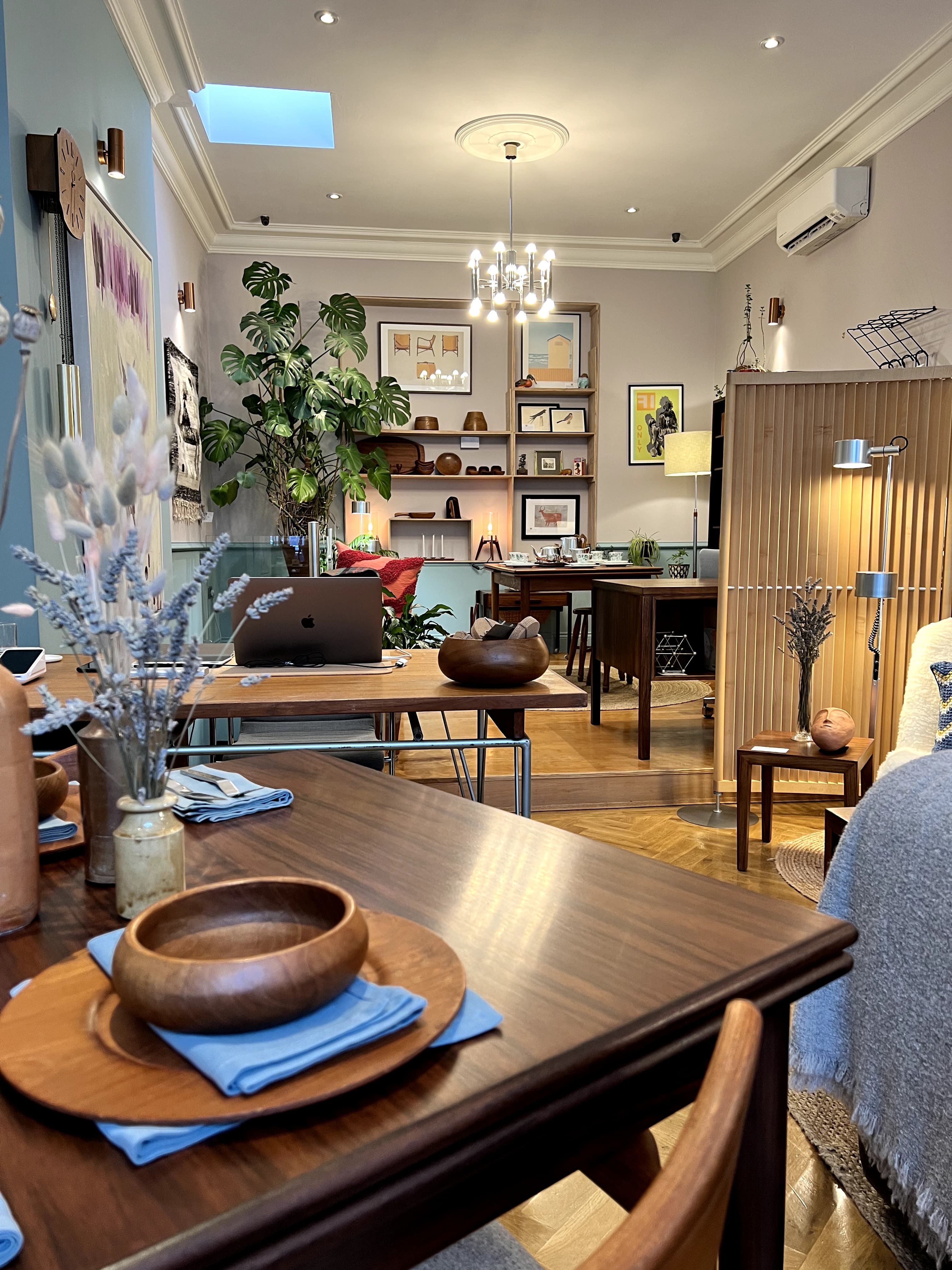
For Ferro Velho, a mid-century furniture store in Islington, London, the challenge was to create a flexible retail system to work with the existing store aesthetics, for a constantly changing collection of one-off pieces, without allowing the fittings to compete with the furniture. The response was a restrained, modular system of plywood structures, designed to move, adapt and quietly frame the store’s distinctive mid-century pieces.
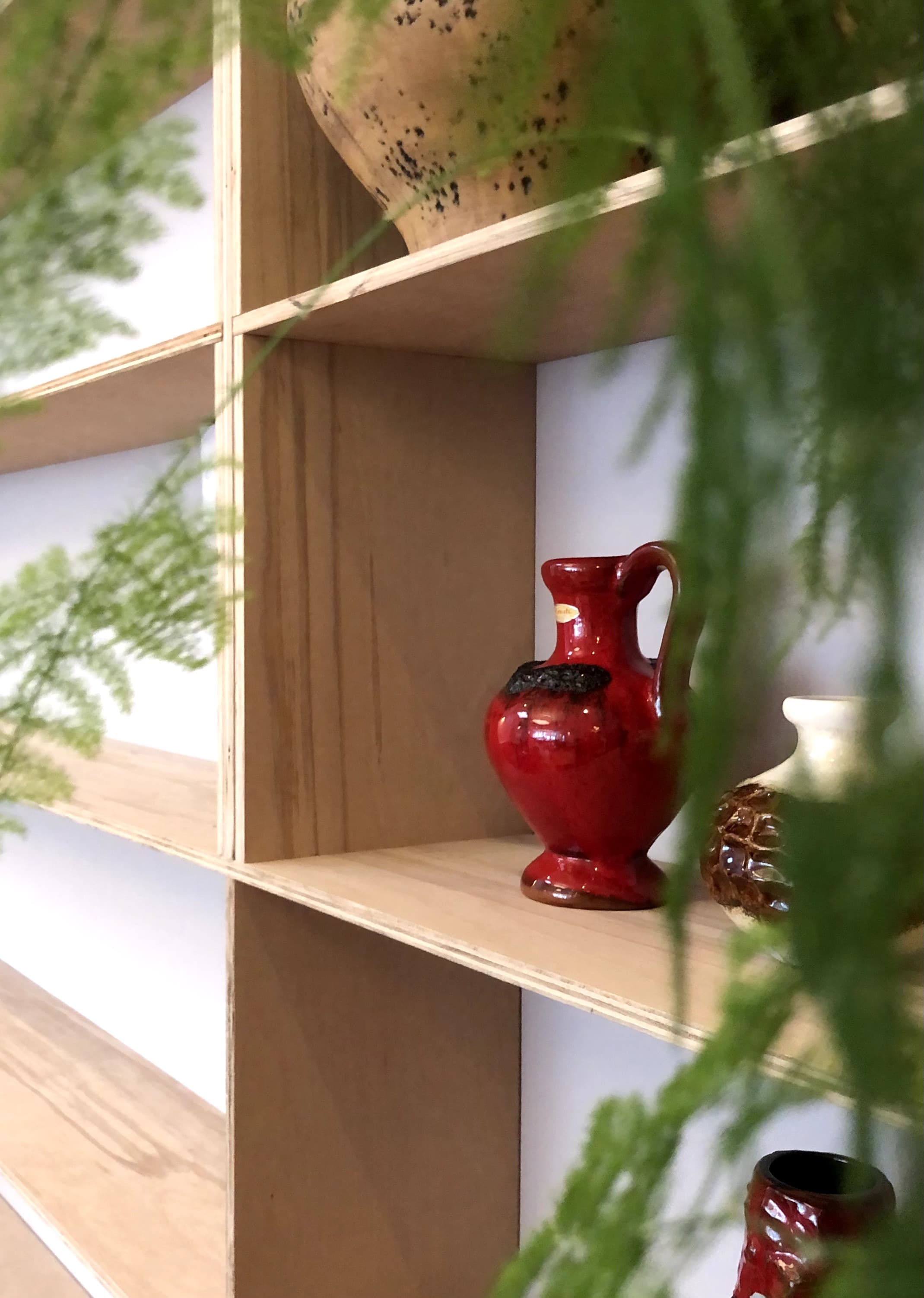
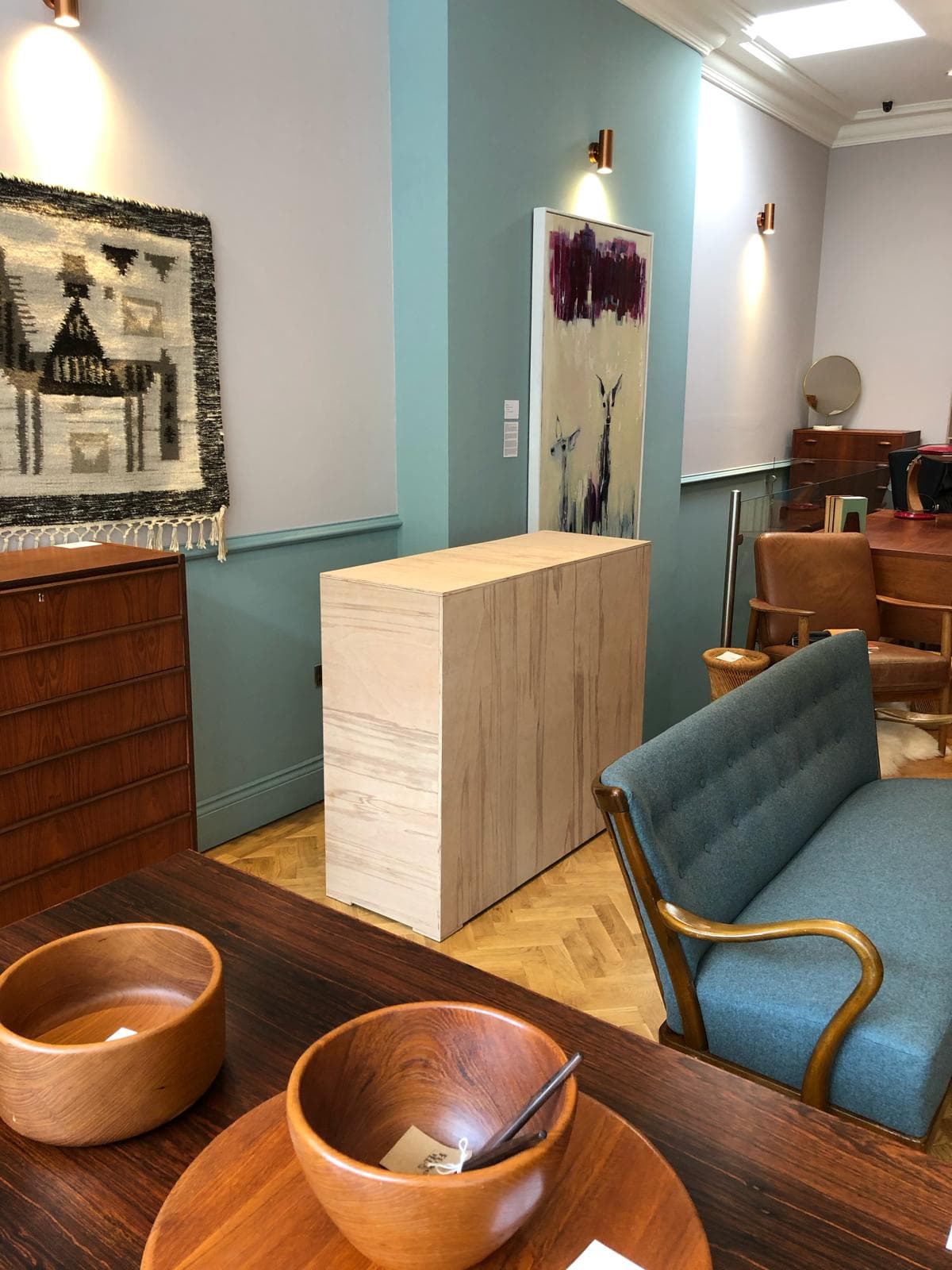
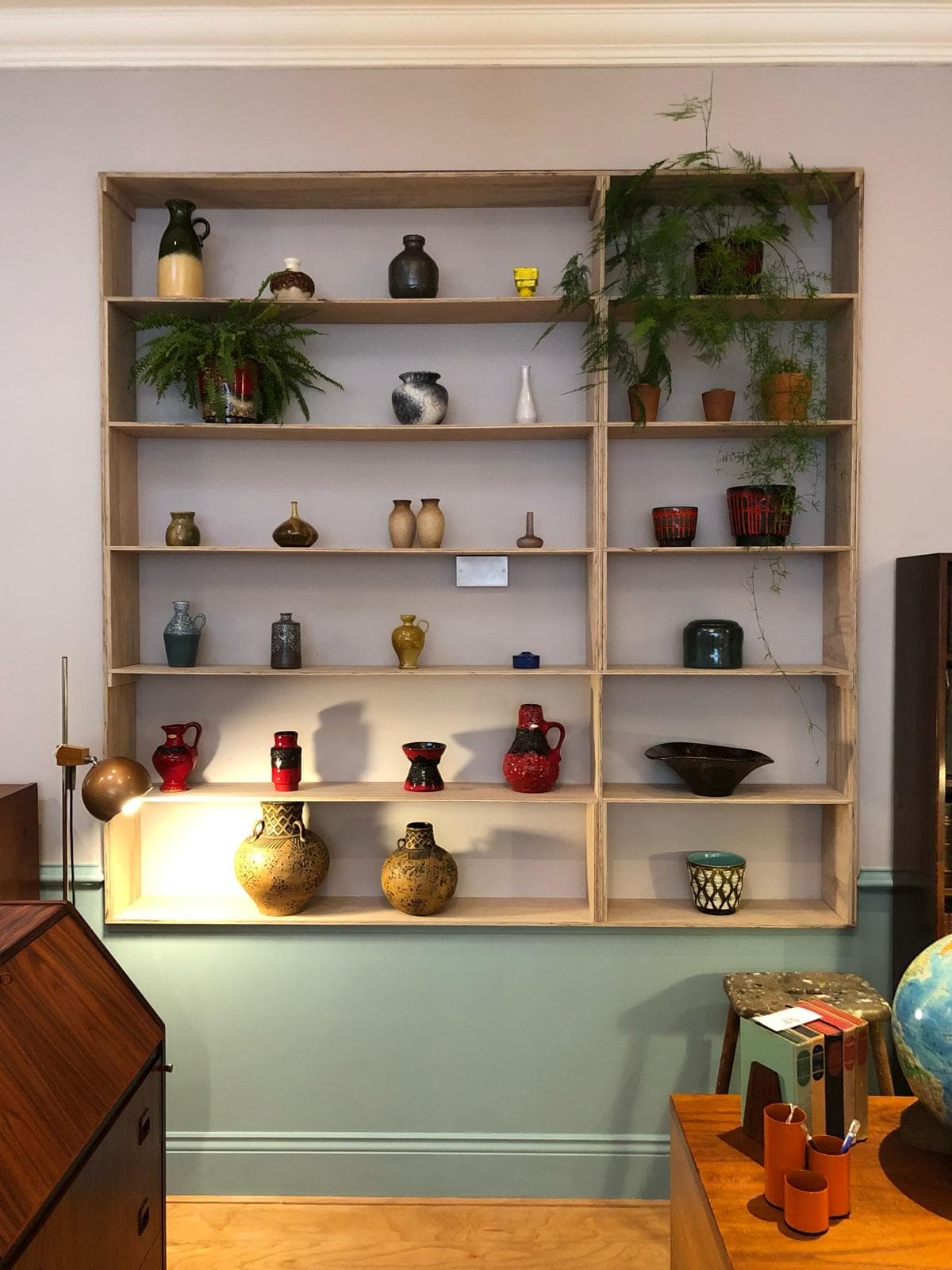
The project included a series of plywood plinths, rear shelving, low-level window displays, a point-of-sale desk, external A-board and the store’s identity signage. Each element was designed as part of the same visual language, honest, functional and deliberately understated.
Plywood was selected as the primary material for its warmth, simplicity and versatility. Rather than creating fixed displays for specific products, the fittings were conceived as a modular system that could be moved, rearranged and combined. Plinths could be stacked to create different levels, while shelving could be repositioned to accommodate everything from smaller objects to larger desks, chairs and sofas. This flexibility was particularly important for a collection made up predominantly of one-off mid-century pieces, where every new arrival has different proportions and requirements.
The window shelving was kept deliberately low, allowing larger pieces to remain visible from the street while maintaining an open relationship between the shop and the pavement. The aim was to create displays that invited curiosity rather than relying on conventional retail graphics or visual clutter.
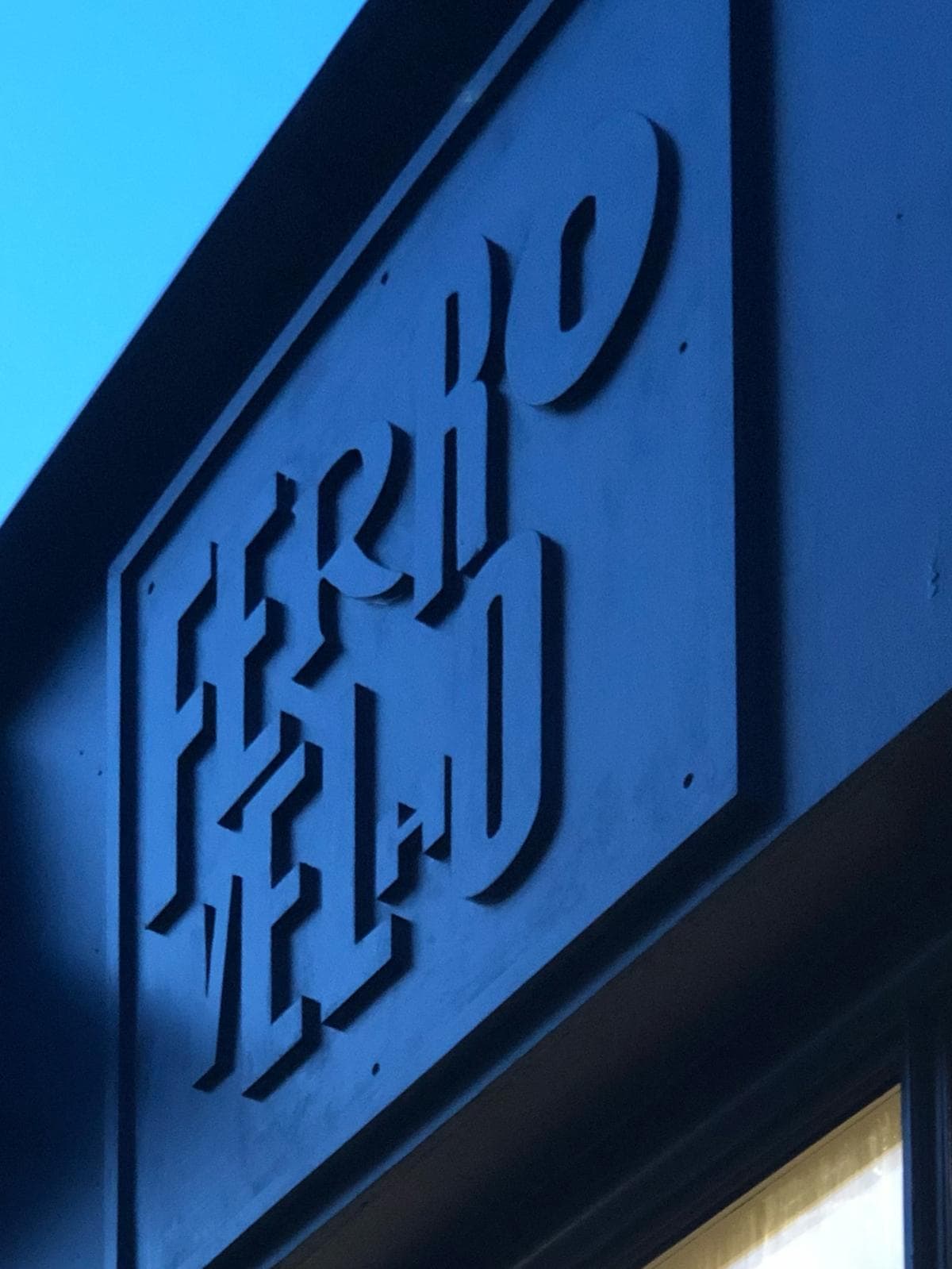
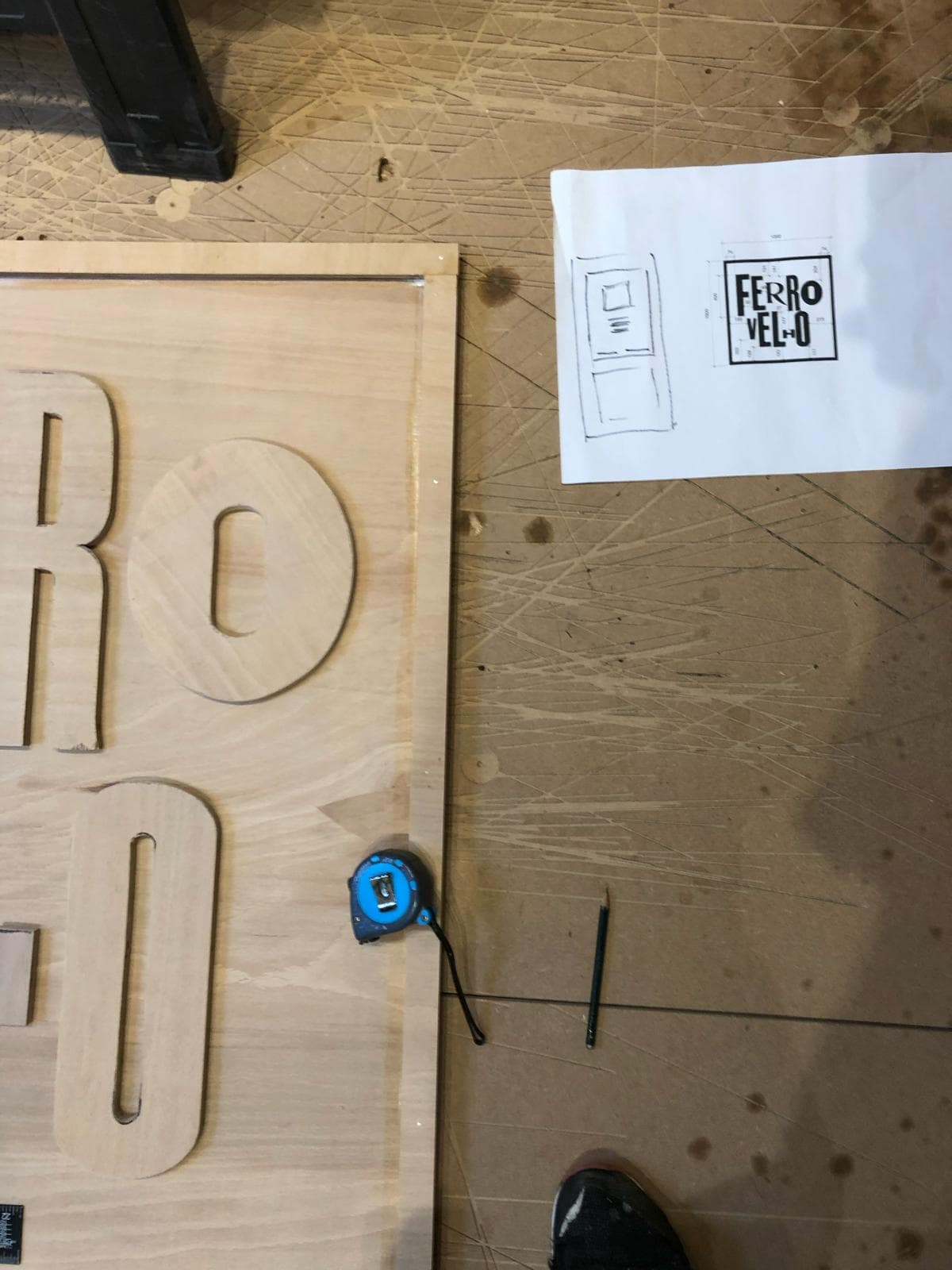
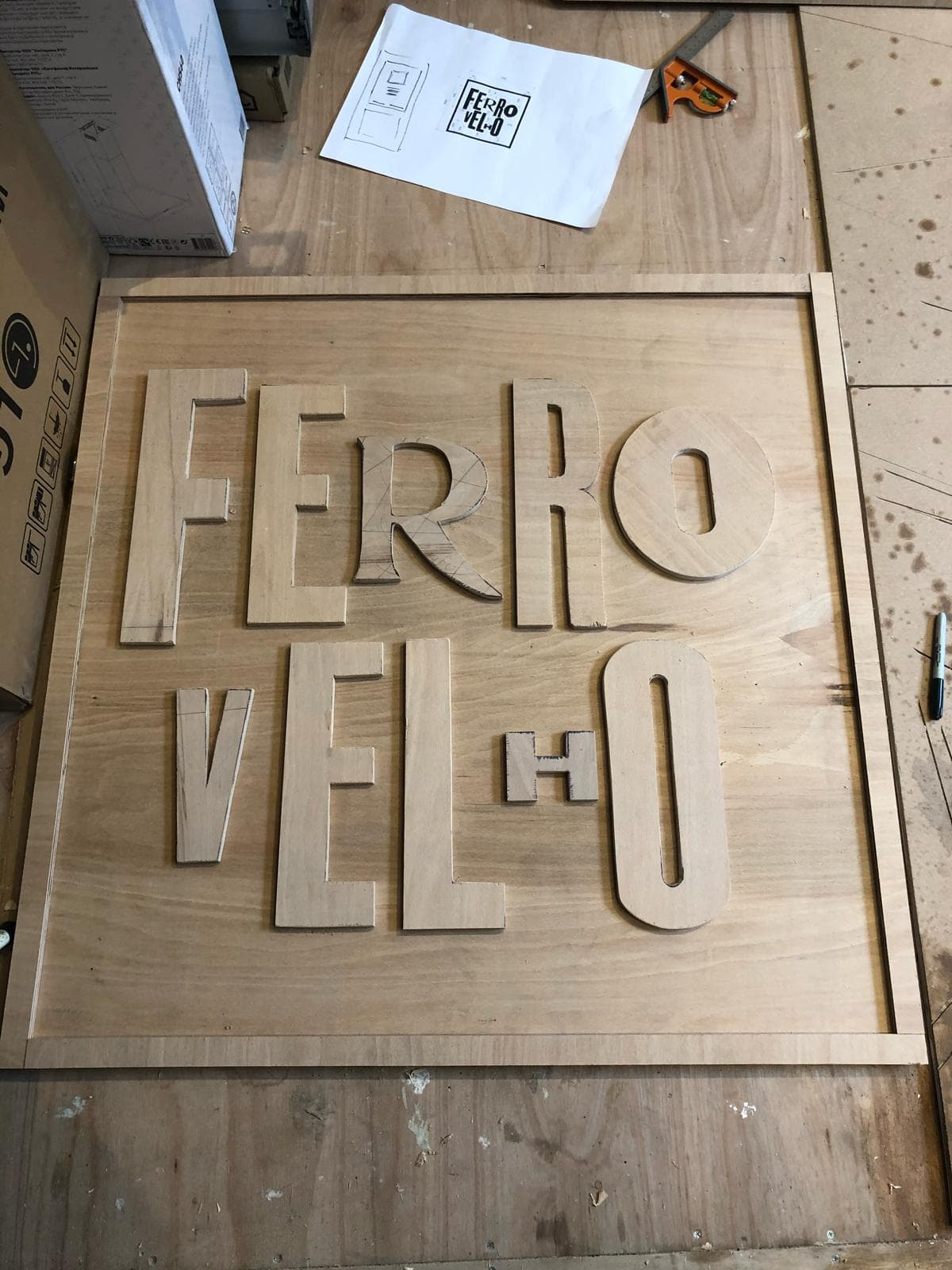
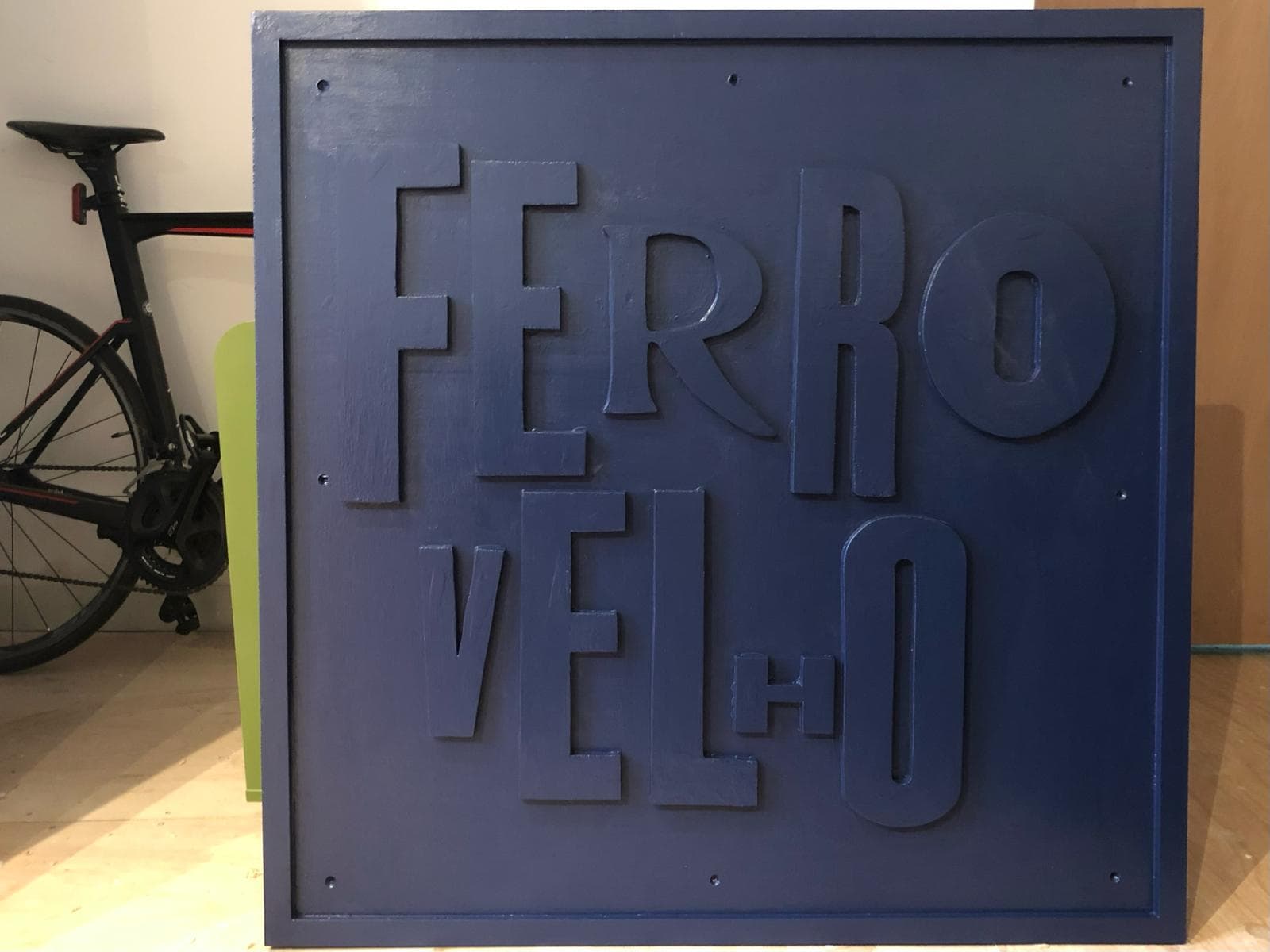
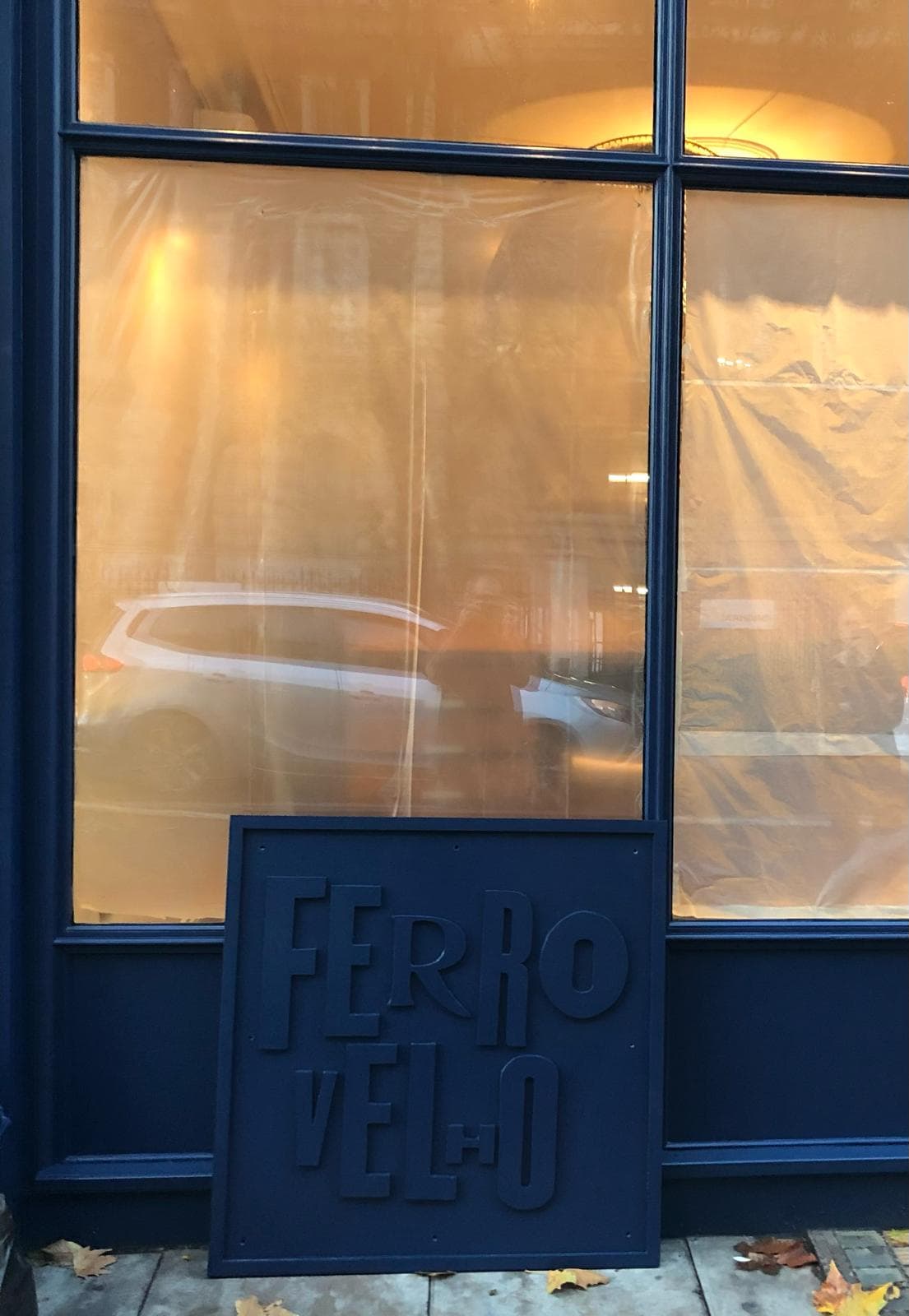
The store sign was designed and fabricated by STÜDYO.STUDIO, the monochrome sign is painted entirely in the brand’s blue, with the Ferro Velho infamous logo, originally put together by the founders from a collection of curated printing blocks. The name was constructed as a subtle three-dimensional element. As the sunlight moves across the façade, the raised lettering casts a changing shadow onto the surface of the building, revealing the store name.
The result is a destination retail environment, quiet from the outside, highly considered inside, and designed to let the furniture remain the focus. The fittings provide a flexible framework around the collection, allowing the store to evolve continuously as new pieces arrive.